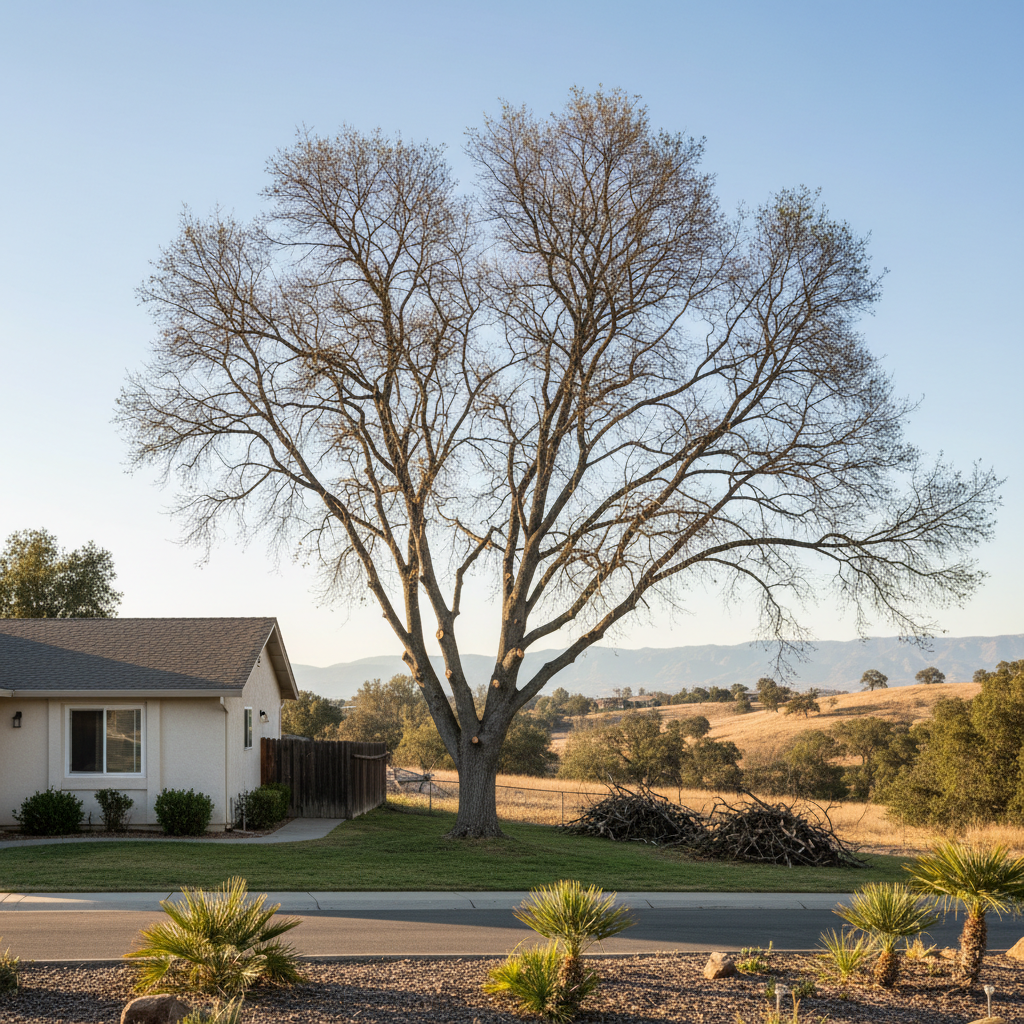
Alright, let's talk about tree pruning here in Atwater. I've seen a lot of good work, and frankly, I've seen a lot of bad work too. Most of the time, when things go sideways, it's not because folks are trying to cut corners on purpose. It's usually because they just don't know what they don't know. So, I want to lay out some of the most common traps I see homeowners fall into when they're planning or hiring for a tree pruning project.
Mistake #1: Thinking All Tree Services Are Equal
This is a big one. You might get three quotes, and one is significantly cheaper. Your first thought might be, "Great, I'll save some money!" But hold on a minute. A low bid can be a huge red flag. What are they cutting corners on? Are they insured? Do they have the right equipment? Are they even qualified to do the job without damaging your trees or property?
I've seen guys with a pickup truck and a chainsaw offering rock-bottom prices. They might not have liability insurance, which means if they drop a limb on your roof or a neighbor's car, you could be on the hook. They might not have workers' comp, so if one of their guys gets hurt on your property, guess who's paying the medical bills? It's a risk you really don't want to take. Always ask for proof of insurance – liability AND workers' comp. A legitimate company, like Coastal Tree, will be happy to provide it.
Mistake #2: Not Knowing What Kind of Pruning Your Tree Needs
You wouldn't ask a doctor to just "do something" to your arm, right? You'd want to know what the problem is and what treatment is needed. Trees are similar. There's thinning, raising, reduction, deadwooding, corrective pruning... the list goes on. Each type serves a different purpose and impacts the tree differently.
A common mistake is asking for a "topping" job. This is where they just lop off the top of the tree, often leaving stubs. It's terrible for the tree. It stresses it out, encourages weak, rapid growth, and can even shorten its lifespan. It also looks awful. A good arborist will explain what your tree needs based on its species, age, health, and location, and they'll never recommend topping unless it's for very specific, rare circumstances like utility line clearance, and even then, there are better methods. If a company suggests topping as a general pruning method, thank them for their time and move on.
Mistake #3: Ignoring Local Regulations and Tree Health
Here in Atwater, we've got a mix of older, established neighborhoods with mature trees and newer developments. Depending on where you live, you might have specific city ordinances about tree removal or even significant pruning, especially for certain species or heritage trees. You don't want to get hit with a fine because you didn't check. Always ask your arborist if they're aware of and comply with local regulations.
Another thing is tree health. Sometimes, a tree that looks fine on the outside might have internal issues. For instance, we've got a lot of clay soil in parts of Atwater, which can sometimes lead to root issues if drainage isn't good. An experienced arborist won't just start cutting; they'll assess the tree's overall health, looking for signs of disease, pests, or structural weakness. Pruning a sick tree incorrectly can make things worse. A good arborist will tell you if pruning isn't the best solution or if there are underlying problems that need addressing first.
Mistake #4: Not Getting a Clear Scope of Work in Writing
Verbal agreements are great for a handshake, but for a tree project, you need details. What exactly are they going to prune? Which branches? How much will be removed? What's the cleanup plan? Will they haul away all the debris, or will they leave it for you to deal with?
I've heard stories where homeowners thought they were getting one thing, and the crew did something else entirely. Or they thought the price included cleanup, and then they were left with a huge pile of branches. Get everything in writing: the exact services, the total cost, the timeline, and what's included in the cleanup. This protects both you and the contractor and prevents misunderstandings down the road.
Don't rush into a decision. Do your homework, ask questions, and make sure you're comfortable with the company you choose. Your trees are valuable assets to your property, and they deserve proper care.