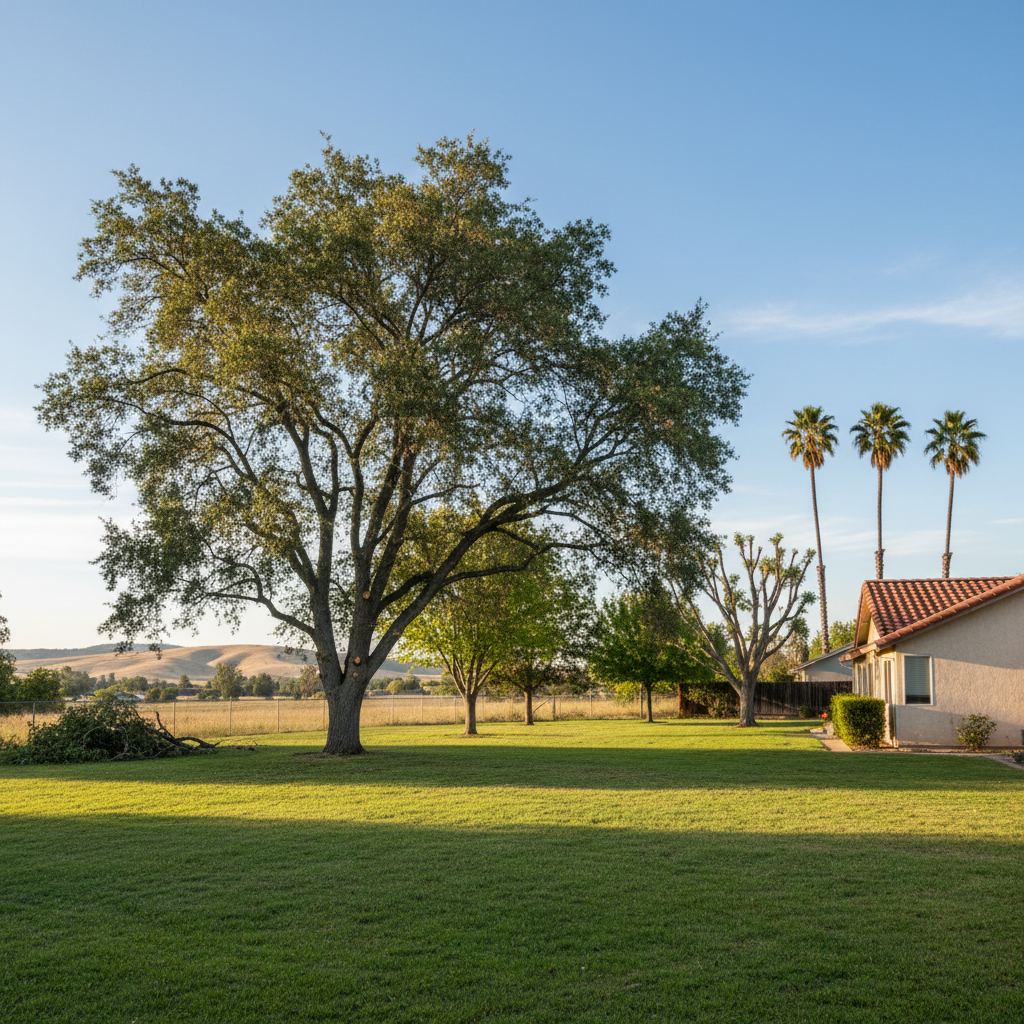
You're thinking about getting those trees pruned, right? Maybe they're looking a little shaggy, or you're worried about branches over the roof. Good call. Proper pruning isn't just about making things look neat; it's vital for tree health, safety, and even boosting your property value. But I've seen folks in Atwater make some real head-scratchers when it comes to this, and it often ends up costing them more in the long run.
Mistake #1: Thinking All Pruning Is the Same
This is a big one. You wouldn't hire a general handyman to fix a complex electrical issue, would you? Same goes for trees. There's a world of difference between a quick trim and a structural prune. Some homeowners just want a little off the top, or they'll ask someone to 'thin it out.' But 'thinning out' can mean a lot of things to different people, and if it's done wrong, it can seriously damage your tree. I'm talking about things like 'lion-tailing,' where someone strips all the inner branches, leaving just a tuft at the end. That makes the branch weak, prone to breaking, and looks awful. Or topping, which is almost always a terrible idea for most mature trees. It stresses the tree, opens it up to disease, and leads to rapid, weak growth that'll just need more aggressive pruning down the line.
You need to know what kind of pruning your tree actually needs. Is it crown cleaning (removing dead or diseased branches)? Crown reduction (making it smaller overall, but correctly)? Crown raising (lifting the canopy for clearance)? A good arborist will talk you through this and explain the 'why' behind their recommendations. If they just say, 'Yeah, we'll trim it up,' without asking questions or explaining their approach, that's a red flag.
Mistake #2: Going for the Cheapest Bid Without Asking Why
Look, I get it. Money matters. Everyone wants a good deal. But when it comes to tree work, the cheapest bid can often be the most expensive mistake you make. I've seen it time and again. Someone gets a ridiculously low quote, the crew comes out, hacks away at the tree, and then you're left with a damaged tree, or worse, a dangerous situation. Often, these low-ballers aren't insured, or they don't have the right equipment, or they're not trained in proper arboriculture. If a company is significantly cheaper than everyone else, there's usually a reason.
Ask for proof of insurance – liability and workers' comp. If they don't have it, and someone gets hurt on your property, or they damage your house or your neighbor's fence, you could be on the hook. That's a headache you don't want. Also, ask about their experience and certifications. Are they ISA Certified Arborists? Do they understand tree biology? It makes a huge difference. At Coastal Tree, we always make sure our guys are trained and know what they're doing. It's not just about cutting; it's about knowing where and how to cut for the tree's long-term health.
Mistake #3: Ignoring the Season and Local Conditions
Timing is everything with pruning. Pruning a tree at the wrong time of year can stress it out, make it more susceptible to disease, or reduce its flowering or fruiting. For most trees in our area, late fall or winter, when they're dormant, is ideal for structural pruning. You can see the branch structure better, and the tree is less likely to bleed sap or attract pests. However, some trees, like magnolias or fruit trees, have specific pruning windows. If someone suggests a heavy prune in the middle of a scorching Atwater summer, when the tree is already stressed by heat and drought, you should question that advice.
Also, think about our soil. We've got a lot of clay in Atwater, especially in some of the older neighborhoods like those around Applegate Park. That heavy soil can affect root development and overall tree health, which in turn influences how a tree responds to pruning. A good arborist understands these local nuances. They'll consider the tree's health, its species, and the local environment before making a plan.
Mistake #4: Not Getting a Clear Scope of Work in Writing
This seems obvious, but people skip it. You have a conversation, you agree on a price, and then the crew shows up. But what exactly are they doing? 'Trimming the oak tree' isn't specific enough. Get it all in writing: what branches are being removed, what type of pruning cut will be used, how much will be removed, what's included in the cleanup, and what's excluded. This protects both you and the contractor. If there's a misunderstanding later, you can refer back to the agreement. Don't just rely on a handshake, especially for bigger jobs.
Mistake #5: Forgetting About the Cleanup
So, the tree is pruned, looks great. Then you realize there are branches and sawdust everywhere, and the crew is packing up. Always clarify what the cleanup process entails. Will they chip all the debris? Haul it away? Rake up the small stuff? What about stump grinding if a tree was removed? Don't assume anything. A professional service, like Coastal Tree, will typically include full cleanup, leaving your yard looking tidier than when we arrived. But if it's not in the quote, it might not be part of the service.
Pruning is an investment in your property and the health of your trees. Do your homework, ask the right questions, and don't be afraid to walk away if something feels off. Your trees will thank you for it.